
Amy Lycklama
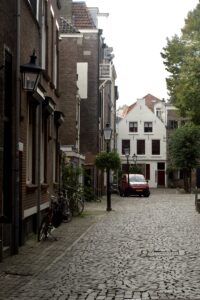
Perceptions on an Identity of UU Game Research – Part 3
Through discussing themes of Dutchness, Applied versus Theoretical, and Digital versus Analogue, we get an image of whether or not there is such a thing as a Dutch game research identity, as well as an insight into how the field might continue to grow, change, and adapt in the future. These themes together each form components of understanding the ways in which game research is engaged with academically in the Netherlands. In the interviews these thematic commonalities emerged, and highlighting both the similarities and differences offers an insight into the ways in which the research identity has been self-constructed at the UU. (Article 3 of 3)
What is (Dutch) Game Research? – Part 2
Discussing the themes and patterns presented by game researchers from a variety of backgrounds at the UU helps offer an insight, offers an insight into possible expressions of the field of game research as a whole. This second part of the series explains the reasoning behind the interviews conducted.
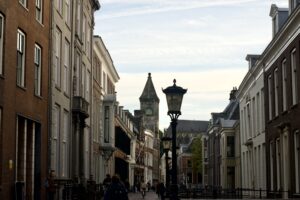
What is (Dutch) Game Research? – Part 1
Is there a specific Dutch identity to the game research conducted in the Netherland? Or at the UU? Part 1 of a series of articles exploring this key question.
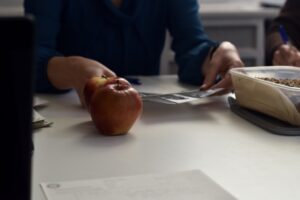
Fostering an Open Mind – First Test of WP2
On June 7th 2024, the Fostering an open mind and open attitude in higher education using games and art-based educational activities (Open Mind) project ran an initial play test of the first two components of Work Packet 2 (WP2), a toolbox to aid students in building games that deal with often complex and polarizing topics in an approachable manner.

“Beavers don’t walk on roads”: Beaver-play for more-than-human cartographies
In this paper, Laura op de Beke, Linas Kristupas Gabrielaitis, Oğuz ‘Oz’ Buruk,Velvet Spors, and Ferran Altarriba Bertran introduce the notion of beaver-play to understand play that challenges spatial conventions, transgresses boundaries, and redraws territories.
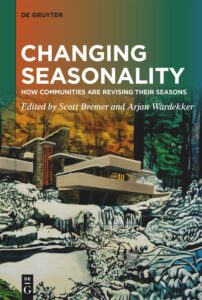
Dark seasonality in videogames
"Dark seasonality in videogames" is a chapter in the larger book Changing Seasonality: How Communities are Revising their Seasons, which explores the role of calendars, seasons, and the cultural reaffirmations (or choice not to) thereof.
Climate Larps: Environmental Design in Nordic LARP
In an article published in the Journal of Analogue Game Studies Laura op de Beke discusses the role of LARP (Live Action Role Playing) games in understanding the climate crisis. Within the article she explores how the environment is considered and included within the Nordic LARP sphere.

Spationomy 2.0- An Application of Discursive Game Design
In a time where it is difficult to engage with the increasingly fraught world around us, games scholars are continuing to search for new ways to approach difficult topics. One such example, is the application of Discursive Game Design(DGD) as seen in the Carbon Pearl game produced in 2021.

Fostering an open mind and open attitude in higher education using games and art-based educational activities
With the use of art and media tools such as dialogical art, game play, and game development, this project aims to foster a space wherein it is possible to discuss complex topics, and for students with diverging opinions to be able to civilly discuss while learning from one another and developing a greater understanding of those whose opinions may differ from their own.

Spationomy 2.0
The Spationomy 2.0 project was started in October of 2019, and concluded with a final conference held in November of 2022. The project was funded by the Erasmus+ program of the European Union.