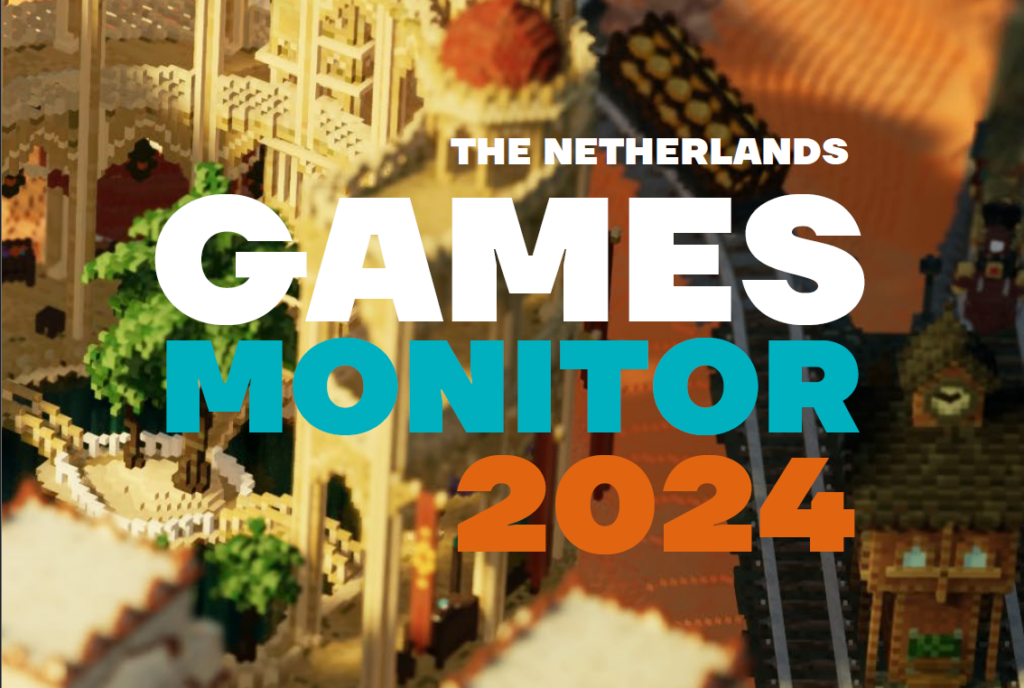
Dutch Games Monitor 2024 is out now!
The new Dutch Games Monitor of 2024 has just been released by the Dutch Games Association. This monitor reports the facts, trends, and developments in the Dutch games industry over the past few years.
Everyone seems to have an opinion on generative AI — or at least 99% of Dutch developers do. And for better or worse, it’s clear that GenAI will impact this industry. That’s why Matthijs Dierckx and the Dutch Games Association organized an event about adoption, stance, and the general past, present and future of this
Programme, sign-up sheet, and abstracts now available!
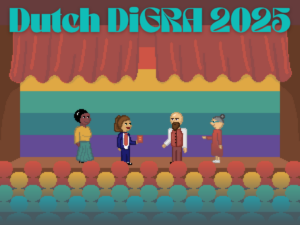
This year the Dutch DiGRA is hosted by Utrecht University. The programme is filled with research about the future of game studies, gamification and play in contemporary society, and much more! All are welcome, so sign up using the Google Form in this post!
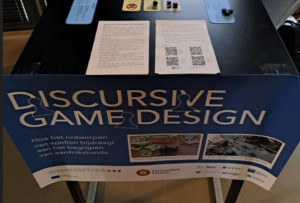
Co-creation of games, participatory design, open dialogue, and social perspective-taking currently lie at the centre of game research at Utrecht University. All these practices are characteristic of Discursive Game Design (DGD), a method that highlights the processes underlying practice-based game research, rather than a final "fixed" product.
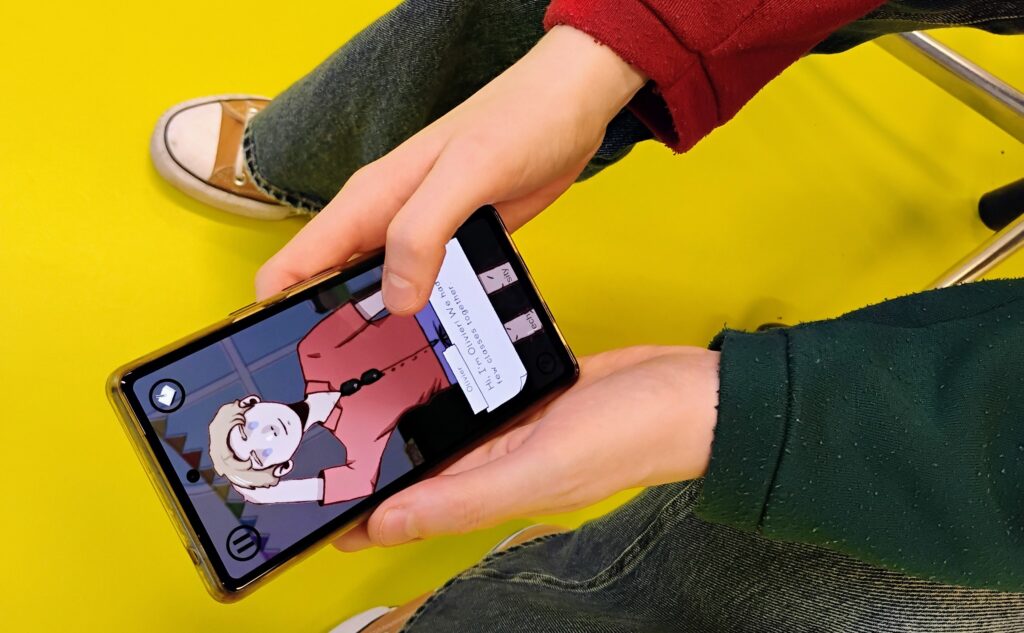
From now on, the Open Mind game, a creative educational game in the style of “whodunit”, is available in the Apple App and Google Play store. Students play the game on their own smartphones and receive mysterious messages from an unknown sender. By talking to various characters about their traits, values and beliefs, they have
Last November Aengus, Isabel and Mick visited two conferences to share some of the outcomes of the Erasmus+ hape2gether project with a broader audience.
Book Title: Beyond the Empathy Machine: Critical Perspectives on Virtual Reality Editors: Professor Sandra Ponzanesi (s.ponzanesi@uu.nl), Dr. Jenny Andrine Madsen Evang (j.a.m.evang@uu.nl), Dr. Wouter Oomen (w.a.oomen@uu.nl), Laurence Herfs (l.l.herfs@uu.nl), and Lisa Burghardt (l.burghardt@uu.nl) Over the last decade or so, Virtual Reality (VR) has been honed as a new frontier in social tech. From Chris Milk and Gabo
Co-creation of games, participatory design, open dialogue, and social perspective-taking currently lie at the centre of game research at Utrecht University. All these practices are characteristic of Discursive Game Design (DGD), a method that highlights the processes underlying practice-based game research, rather than a final "fixed" product.
How do you simulate a climate crisis? How can you convey an ecocritical message that invites reflection and, perhaps, action? Participants of the Mzansi Game Jam (MGJ) developed games that addressed these questions from various angles.
We would like to point you in the direction of a recently released edited volume titled Historiographies of Game Studies: What It Has Been, What It Could Be. The chapters in the book, two of which were authored by UU scholars, critically reflect on both the past and potential futures of game studies as a field.
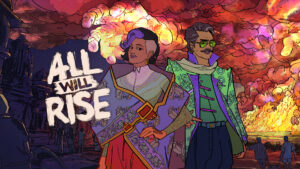
The Kickstarter campaign for All Will Rise: a narrative courtroom deck-builder has gone live. This game, developed by the team of Speculative Agency, has our own Joost Vervoort as science and impact director. He leads the academic side of the project and focus on the societal impact of the game.
Co-creation of games, participatory design, open dialogue, and social perspective-taking currently lie at the centre of game research at Utrecht University. All these practices are characteristic of Discursive Game Design (DGD), a method that highlights the processes underlying practice-based game research, rather than a final "fixed" product.
How do you simulate a climate crisis? How can you convey an ecocritical message that invites reflection and, perhaps, action? Participants of the Mzansi Game Jam (MGJ) developed games that addressed these questions from various angles.
Programme, sign-up sheet, and abstracts now available! This year the Dutch DiGRA is hosted by Utrecht University. The programme is filled with research about the future of game studies, gamification and play in contemporary society, and much more! All are welcome, so sign up using the Google Form in this post!
Last November Aengus, Isabel and Mick visited two conferences to share some of the outcomes of the Erasmus+ hape2gether project with a broader audience.