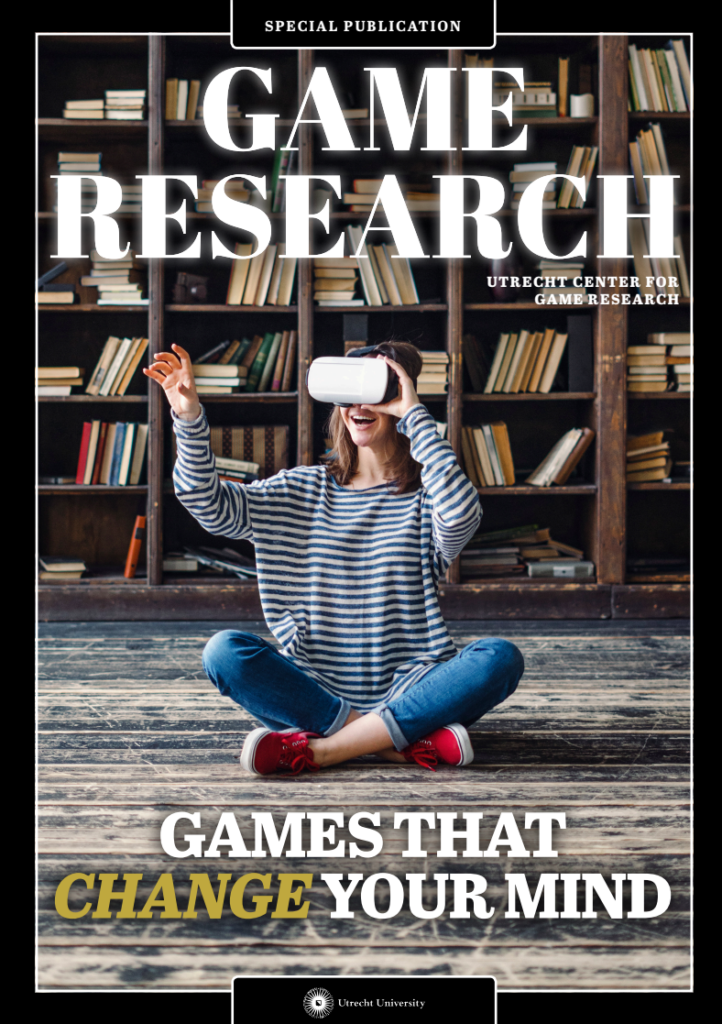
Game Research Magazine
In 2017, a special issue titled Game Research – Games that Change your Mind was published about the research projects of the Utrecht Center for Game Research.

In 2017, a special issue titled Game Research – Games that Change your Mind was published about the research projects of the Utrecht Center for Game Research.
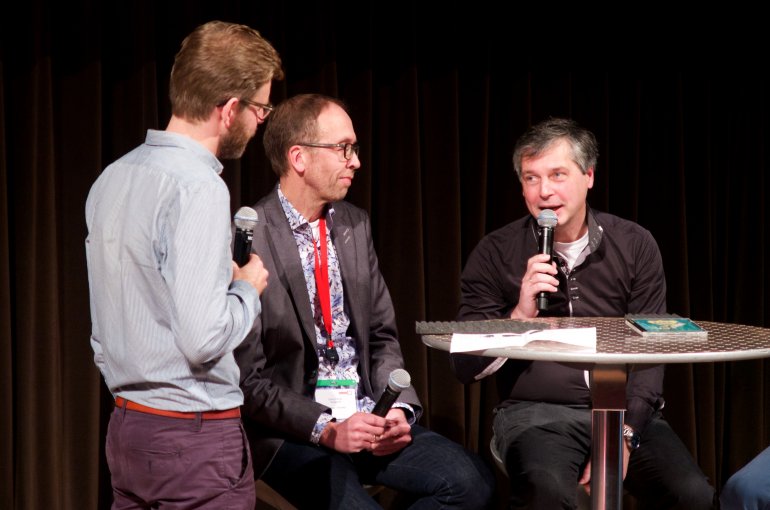
On November 18 2016, Utrecht University and the Netherlands Institute for Sound and Vision organized a joint symposium on the challenges of creating an archive for the history of Dutch games and game development as national cultural heritage.
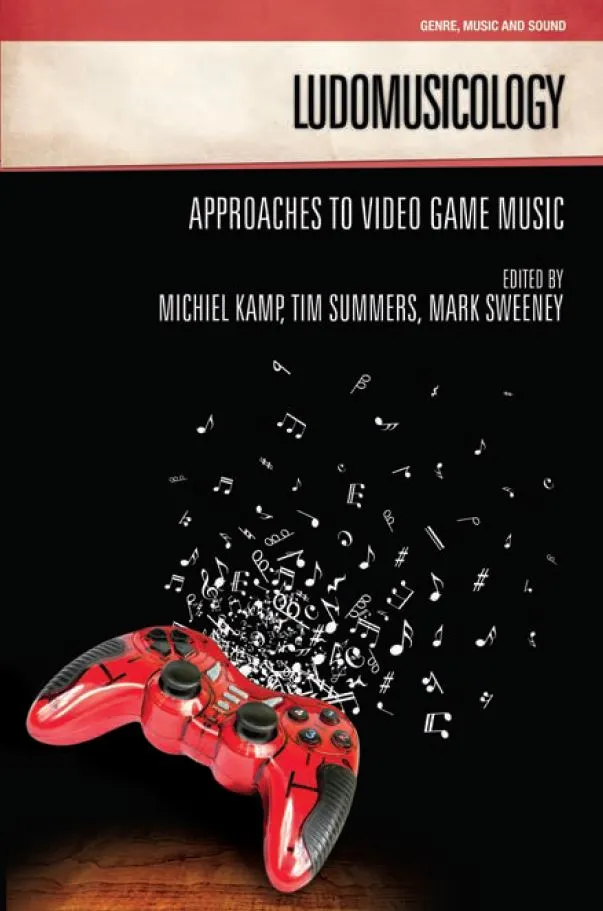
The last half-decade has seen the rapid and expansive development of video game music studies. As with any new area of study, this significant sub-discipline is still tackling fundamental questions concerning how video game music should be approached. In this volume, experts in game music provide their responses to these issues. This book suggests a variety of new approaches to the study of game music.
Co-creation of games, participatory design, open dialogue, and social perspective-taking currently lie at the centre of game research at Utrecht University. All these practices are characteristic of Discursive Game Design (DGD), a method that highlights the processes underlying practice-based game research, rather than a final "fixed" product.
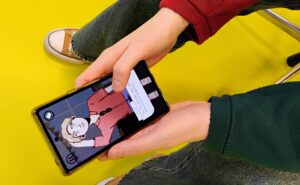
From now on, the Open Mind game, a creative educational game in the style of “whodunit”, is available in the Apple App and Google Play store. Students play the game on their own smartphones and receive mysterious messages from an unknown sender. By talking to various characters about their traits, values and beliefs, they have
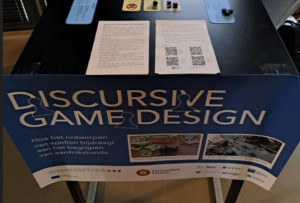
Last November Aengus, Isabel and Mick visited two conferences to share some of the outcomes of the Erasmus+ hape2gether project with a broader audience.

Book Title: Beyond the Empathy Machine: Critical Perspectives on Virtual Reality Editors: Professor Sandra Ponzanesi (s.ponzanesi@uu.nl), Dr. Jenny Andrine Madsen Evang (j.a.m.evang@uu.nl), Dr. Wouter Oomen (w.a.oomen@uu.nl), Laurence Herfs (l.l.herfs@uu.nl), and Lisa Burghardt (l.burghardt@uu.nl) Over the last decade or so, Virtual Reality (VR) has been honed as a new frontier in social tech. From Chris Milk and Gabo

Cover image (c) Christopher Paul High via Unsplash. The new curriculum, which replaces the previous minor “Game Studies’, is a transdisciplinary collaboration between the Department of Media & Cultures studies (MCW), the Copernicus Institute of Sustainable Development and the Department of Information and Computing Sciences and enables students to analyze games and play in contemporary
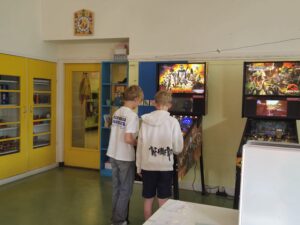
Utrecht University performed play experiments at Basisschool De Odyssee (Utrecht) to understand the positive effects of playing for children. To what extent does playing together promote self-disclosure? Specifically, the researchers were interested in to what extent playing together creates feelings of safety and social connectedness for children, and to what extent those feelings promote self-disclosure,
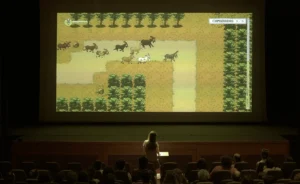
A review of Patrick Blenkarn and Milton Lim's 8 hour revolutionary donkey epic that sits between theatre and videogames. A collective gaming experience that will have you braying heeeee-haaaww while you contemplate issues of labor, automation, violence, and the good life.
Co-creation of games, participatory design, open dialogue, and social perspective-taking currently lie at the centre of game research at Utrecht University. All these practices are characteristic of Discursive Game Design (DGD), a method that highlights the processes underlying practice-based game research, rather than a final "fixed" product.
Cover image (c) Christopher Paul High via Unsplash. The new curriculum, which replaces the previous minor “Game Studies’, is a transdisciplinary collaboration between the Department of Media & Cultures studies (MCW), the Copernicus Institute of Sustainable Development and the Department of Information and Computing Sciences and enables students to analyze games and play in contemporary
Last November Aengus, Isabel and Mick visited two conferences to share some of the outcomes of the Erasmus+ hape2gether project with a broader audience.
From now on, the Open Mind game, a creative educational game in the style of “whodunit”, is available in the Apple App and Google Play store. Students play the game on their own smartphones and receive mysterious messages from an unknown sender. By talking to various characters about their traits, values and beliefs, they have

How do you simulate a climate crisis? How can you convey an ecocritical message that invites reflection and, perhaps, action? Participants of the Mzansi Game Jam (MGJ) developed games that addressed these questions from various angles.