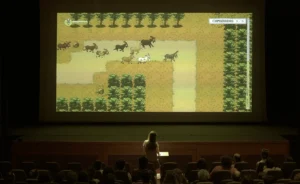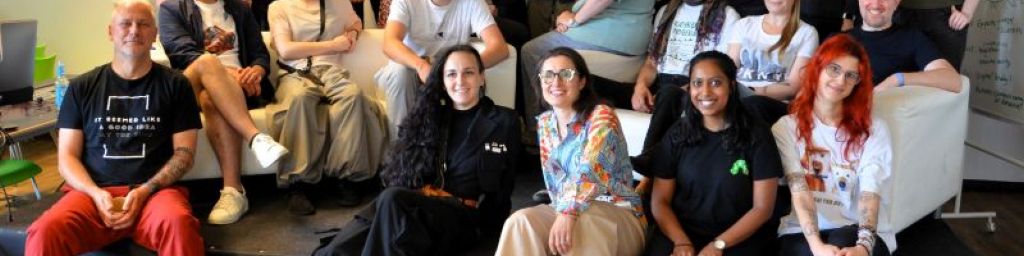
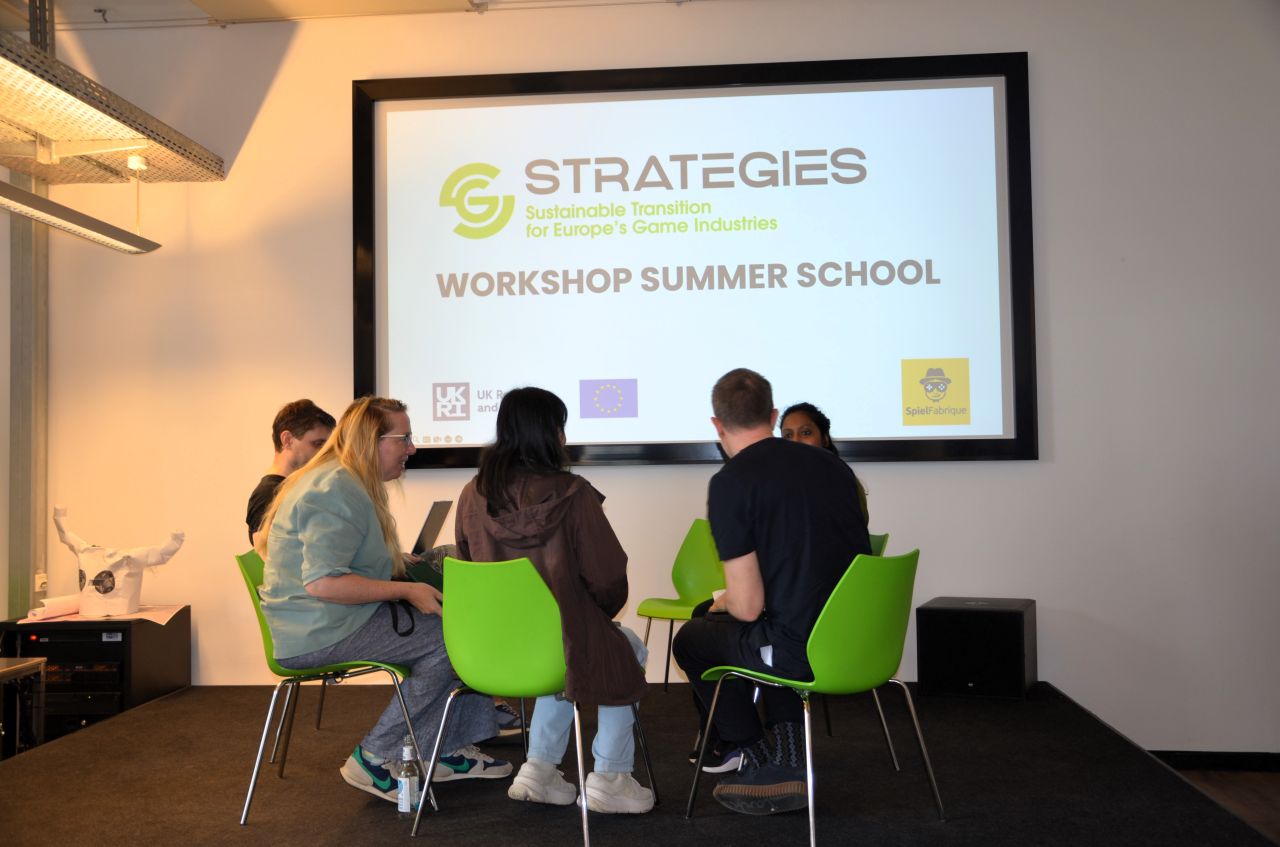
From 31 August to 2 September 2026, the Horizon Europe project STRATEGIES (led by Prof. Joost Raessens, UU) conducted its 2nd annual summer school on games, the climate crisis and sustainable futures, this time organized by Prof. Sonia Fizek and Dr. Ruth Eggels of the Cologne Game Lab/TH Köln.
For more information on the STRATEGIES project, see https://www.strategieshorizon.eu/.
The three-day event brought together a diverse group of students, PhD candidates, lecturers and industry practitioners under the theme ‘Planetary Futures’. All participants brought and pitched their own research projects with the help of a poster, with topics ranging from ecocritical modifications of Minecraft to promote locality and plant awareness over critical perspectives on hydrocolonial themes in ocean-based ecogames to hacking board games about climate policies like Daybreak to explore sustainable futures imaginaries.
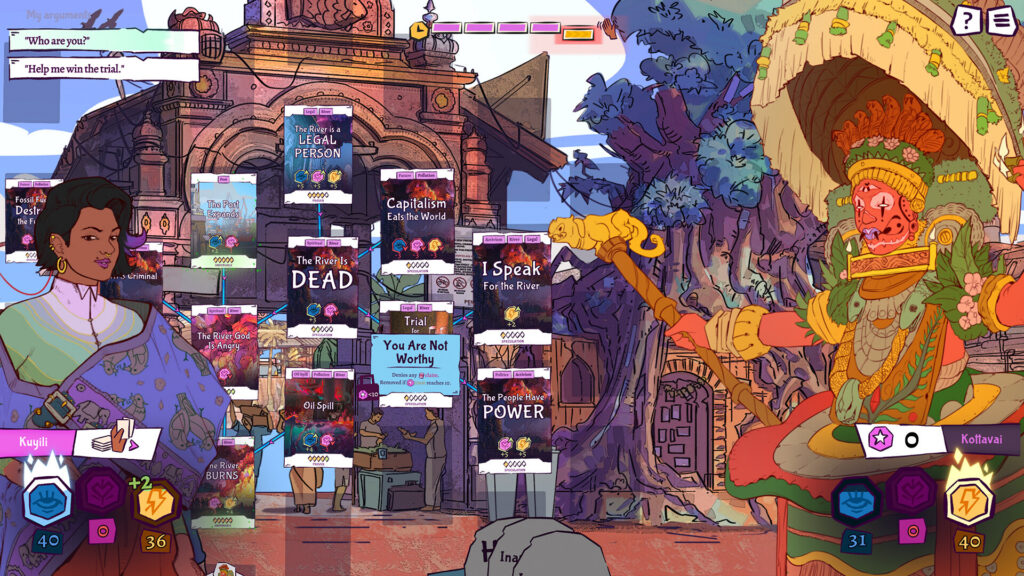
The consortium of the STRATEGIES project was represented by contributions from several participating researchers and industry experts. Joost Vervoort (Utrecht University) discussed principles of making challenging, political games, taking the deck-building game All Will Rise he co-designed as an example. Odile Limpach (Spielfabrique/Cologne Gamelab) conducted a workshop on brainstorming culturally and economically viable climate-themed games using the Green Mediography as a shared knowledge base. Pawel Frelik (University of Warsaw) discussed the distinction between games of the future and games about the future, which are still often driven by and structured around distinctly present (and past) motivations and mindsets, even if their surfaces seem to offer fantastic visions of times and places to come.
On the second day, Maria Wagner (Sustainable Games Alliance) ran a workshop on how to encourage decision-makers to take ecological responsibility when economic competitiveness, uncertainty, conflict, and other immediate concerns increasingly compete for attention. Lukáš Kolek (Charles Games) taught a workshop ondesigning video game experiences around environmental topics, taking his studio’s flagship title Beecarbonize (700,000+ players) as well as more context-focused games for educational programs and schools as examples.
On the third and final day, Stefan Werning (Utrecht University) delivered a closing keynote on lessons learned from two years of ecogame design research within STRATEGIES, the need to think beyond persuasion and how design patterns can help ecogames ‘respond’ to quickly shifting cultural sensibilities and avoid the often-formulaic rhetorics of traditional ecomedia. Finally, Joost Raessens (Utrecht University) continued in this direction by demonstrating how Virtual Reality applications for ecological sustainability can provide a valuable frame of reference and source of inspiration for ecogame design.
The three-day event was another major stepping towards toward building and maintaining a European community of scholars and industry practitioners who dedicate their efforts to harnessing games as a driver of sustainable development and a catalyst for ecological identity. The final STRATEGIES summer school will be organized at Utrecht University in August 2027.